« Some things protect themselves without moving. »
A mark on history
The Anglo-Saxon Futhorc expanded the older runic row for Old English; some later signs are known from manuscripts rather than inscriptions. The verse describes a marsh plant that wounds anyone who grasps it.
Historical referenceElk-sedge
The name Eolh evokes elk-sedge. Some things protect themselves without moving. This is a contemporary reflection on a writing sign, not an ancient divination rule.
Futhorc runes appear both carved and written with a pen. In manuscripts, scribes sometimes used them as abbreviations or puzzles alongside Latin letters.
The Anglo-Saxon Futhorc
Old English speakers added new runes as their language changed, growing the row to as many as thirty-three signs. The Old English Rune Poem gives a verse to many of them, preserving names and associations.
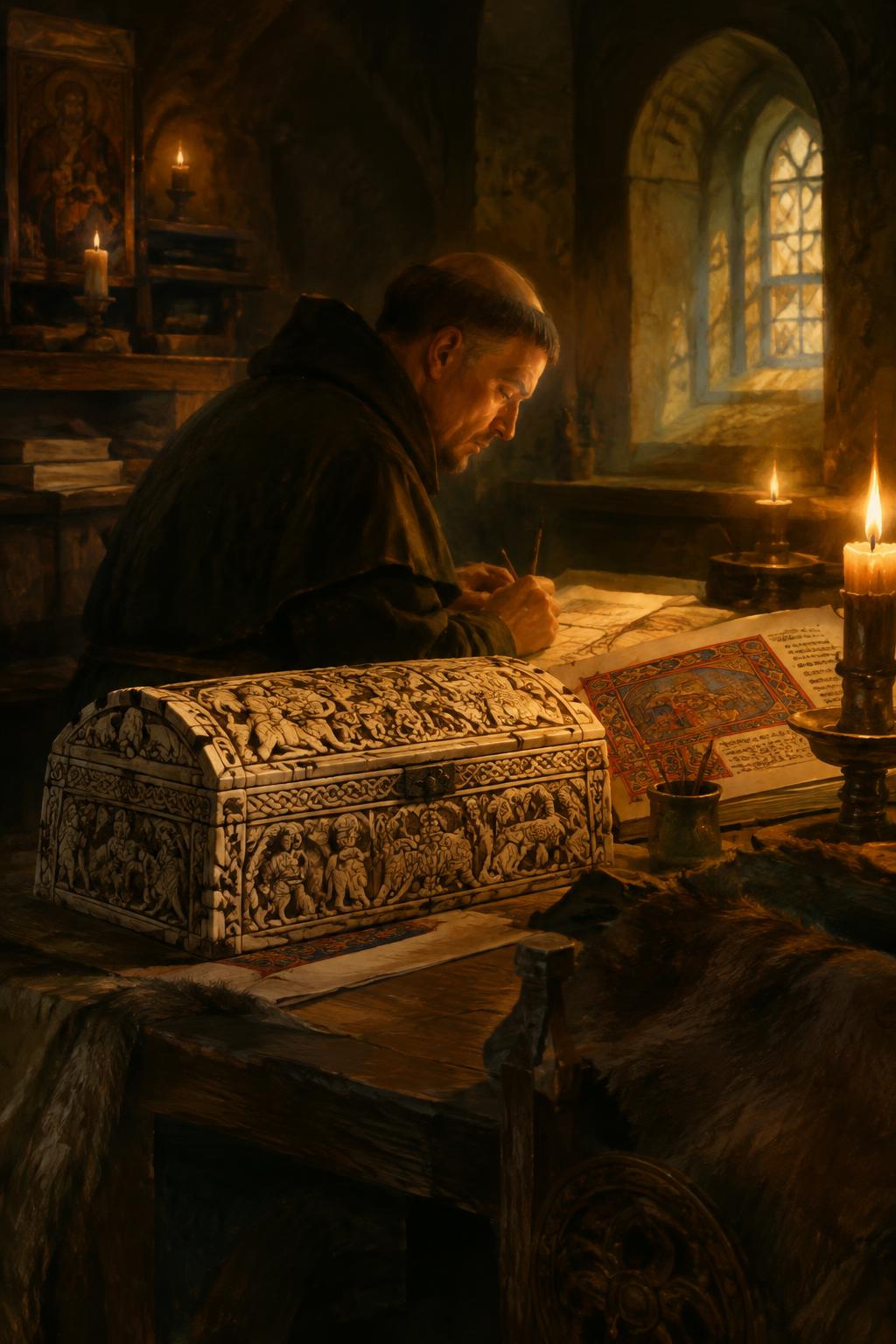
- The Franks Casket (Northumbria)
- The Ruthwell Cross
- The Thames scramasax, carrying a full futhorc row
Living with Eolh
- Draw ᛉ slowly by hand, stroke by stroke, and notice where your eye rests.
- Speak its sound “X / Z” aloud and link it to the idea of elk-sedge.
- Hold one keyword — Elk-sedge, Old English, History — and look for it in your day.
- Return in the evening to its question: What does elk-sedge bring to mind in your own story?
Divinatory readings are modern interpretations; the historical record tells us about sounds, names and inscriptions.
What does elk-sedge bring to mind in your own story?
Question Eolh
Answers are drawn only from this book's explanations of the rune.