« A single tree can shelter many kinds of life. »
A mark on history
The Anglo-Saxon Futhorc expanded the older runic row for Old English; some later signs are known from manuscripts rather than inscriptions. The Old English poem describes the oak as timber for ships and food for swine.
Historical referenceOak
The name Ac evokes oak. A single tree can shelter many kinds of life. This is a contemporary reflection on a writing sign, not an ancient divination rule.
Futhorc runes appear both carved and written with a pen. In manuscripts, scribes sometimes used them as abbreviations or puzzles alongside Latin letters.
The Anglo-Saxon Futhorc
Old English speakers added new runes as their language changed, growing the row to as many as thirty-three signs. The Old English Rune Poem gives a verse to many of them, preserving names and associations.
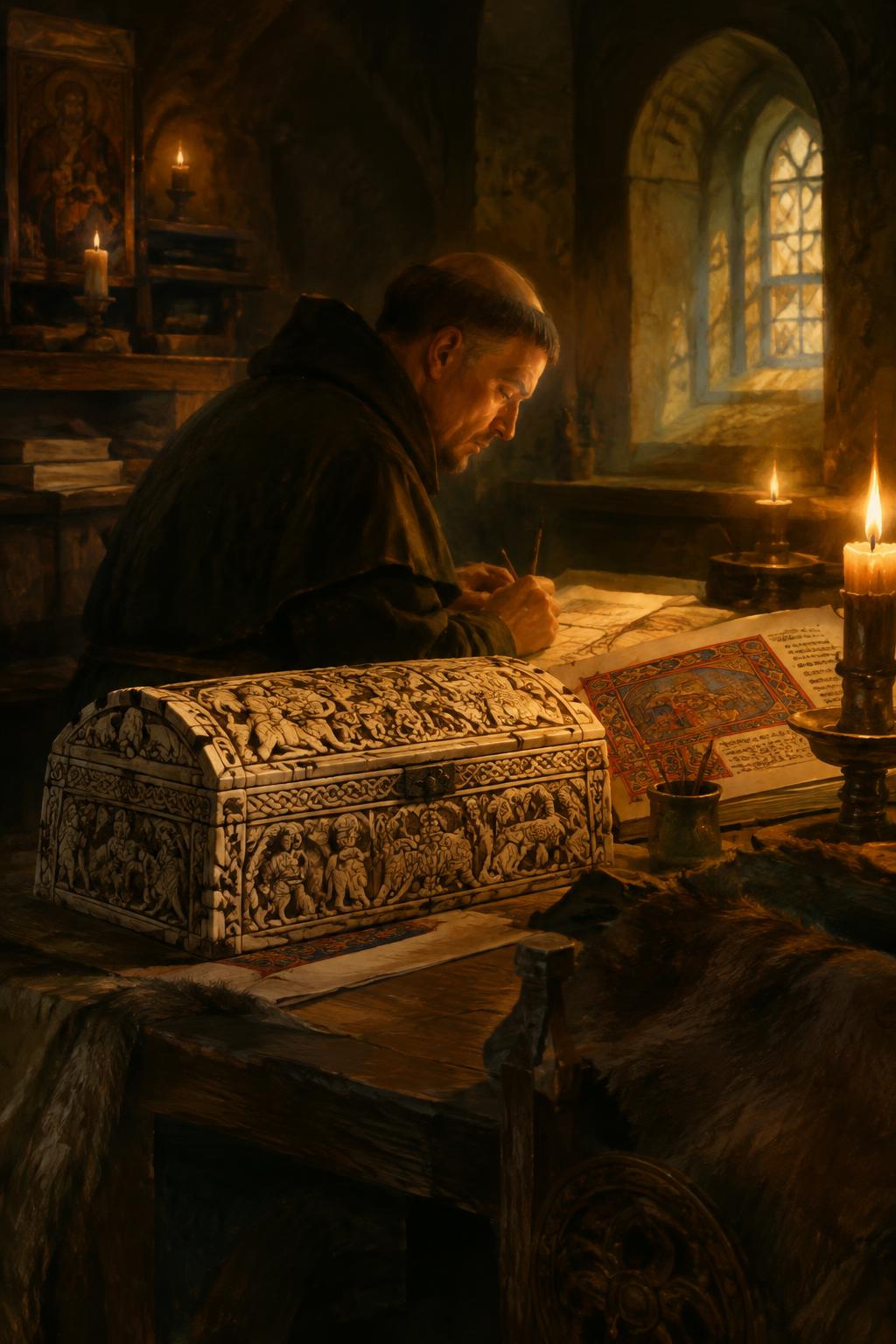
- The Franks Casket (Northumbria)
- The Ruthwell Cross
- The Thames scramasax, carrying a full futhorc row
Living with Ac
- Draw ᚪ slowly by hand, stroke by stroke, and notice where your eye rests.
- Speak its sound “A” aloud and link it to the idea of oak.
- Hold one keyword — Oak, Old English, History — and look for it in your day.
- Return in the evening to its question: What does oak bring to mind in your own story?
Divinatory readings are modern interpretations; the historical record tells us about sounds, names and inscriptions.
Across the traditions
What does oak bring to mind in your own story?
Question Ac
Answers are drawn only from this book's explanations of the rune.