« Some signs survive far outside the best-known alphabets. »
A mark on history
These rare rune forms are known from regional inscriptions or later manuscript evidence. They are graphical variants, not a new ancient alphabet. An uncommon encoded runic character for sh; it is not part of a classical futhark row.
Historical referenceSh sound
The name Sh variant evokes sh sound. Some signs survive far outside the best-known alphabets. This is a contemporary reflection on a writing sign, not an ancient divination rule.
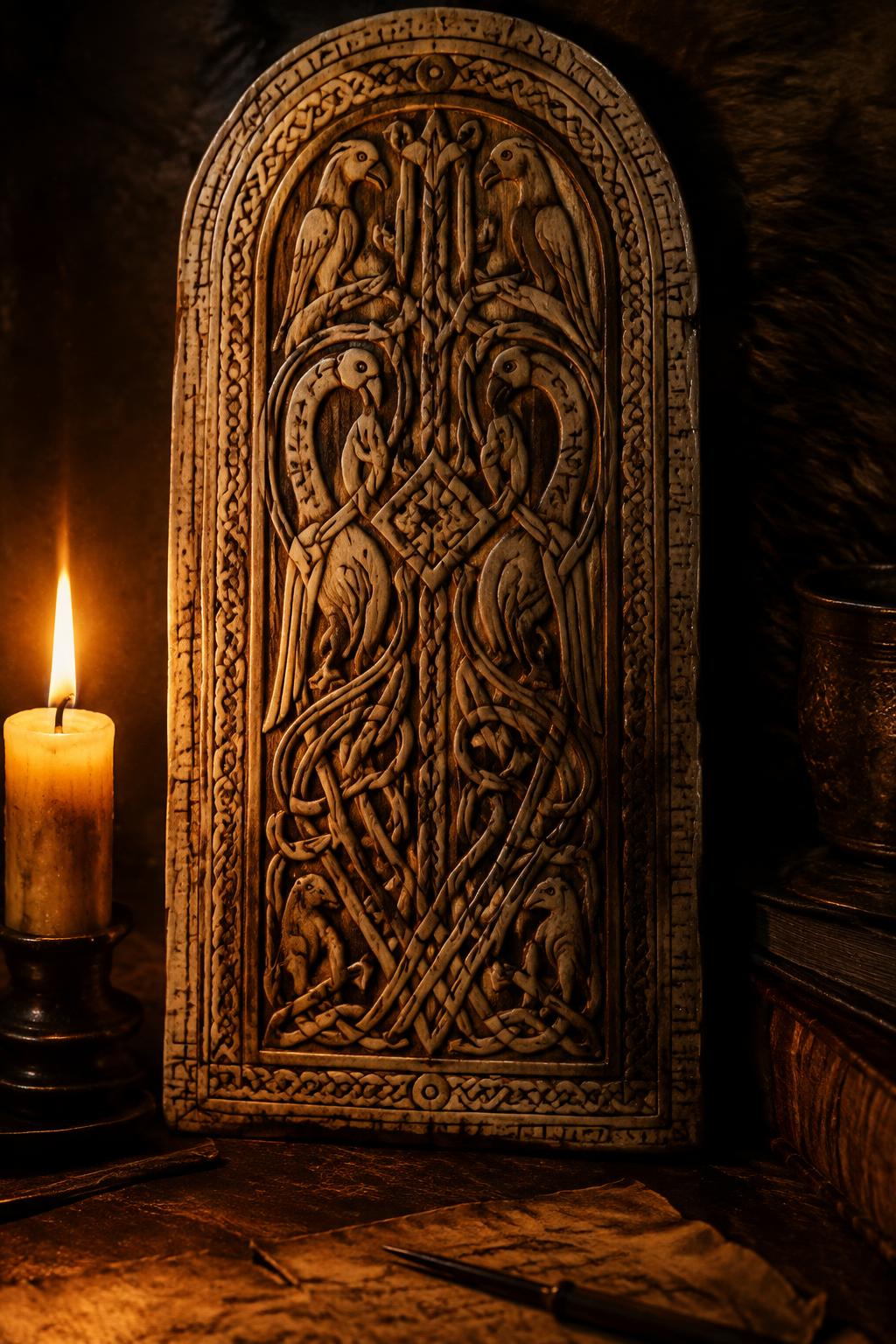
Many of these variants are ornamental adaptations, where a carver reshaped a familiar rune to fit a decorated panel or a scribe's hand.
The Manuscript Variants
These rare forms survive in single inscriptions or later manuscripts. They show how scribes and carvers adapted runes to local sounds and artistic styles.
- The Franks Casket
- Icelandic runic manuscripts
- Unicode runic block records
Living with Sh variant
- Draw ᛲ slowly by hand, stroke by stroke, and notice where your eye rests.
- Speak its sound “Sh” aloud and link it to the idea of sh sound.
- Hold one keyword — Sh sound, Norse, History — and look for it in your day.
- Return in the evening to its question: What does sh sound bring to mind in your own story?
Divinatory readings are modern interpretations; the historical record tells us about sounds, names and inscriptions.
What does sh sound bring to mind in your own story?
Question Sh variant
Answers are drawn only from this book's explanations of the rune.