« Scarcity sometimes reveals what matters most. »
A mark on history
Nauthiz is linked to need and necessity. The rune poems speak of human hardship and the ways people endure it.
The fire of necessity
This rune invites us to distinguish desire from genuine need. Constraint can be difficult; it can also reveal new ingenuity and discipline.
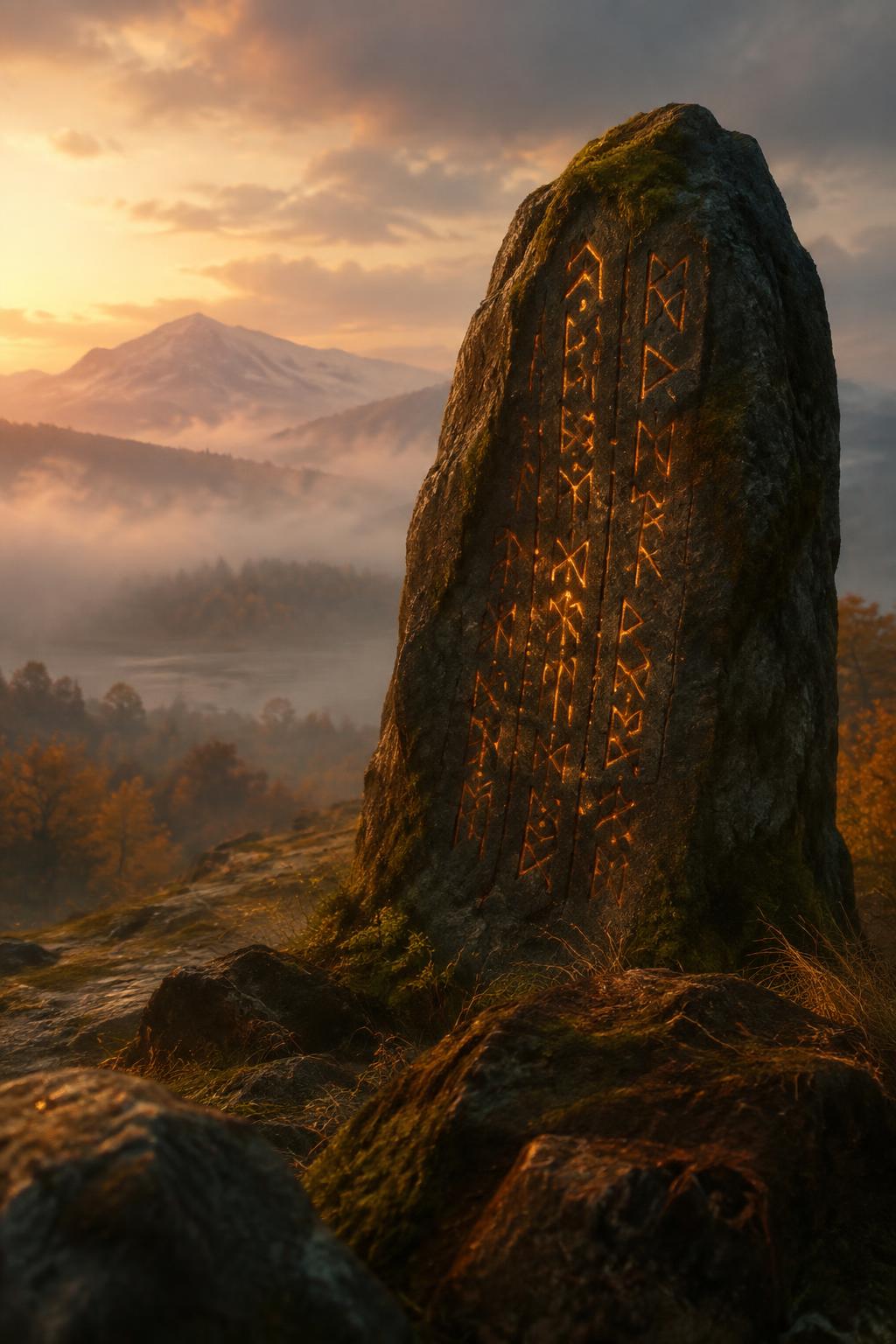
Runes were designed for cutting into wood: straight strokes avoid following the grain, which is why curves are almost absent. The same angular shapes later passed onto stone and metal.
The Elder Futhark
The Elder Futhark is the oldest known runic alphabet. Its twenty-four signs were arranged in three families of eight, called ætts, and were used for short inscriptions of names, dedications and formulas on everyday and prestige objects.
- The Golden Horns of Gallehus (Denmark)
- The Kylver Stone, bearing a full futhark row (Gotland)
- The Vimose Comb, one of the earliest inscriptions
Living with Nauthiz
- Draw ᚾ slowly by hand, stroke by stroke, and notice where your eye rests.
- Speak its sound “N” aloud and link it to the idea of need.
- Hold one keyword — Need, Patience, Ingenuity — and look for it in your day.
- Return in the evening to its question: What do you truly need right now?
Divinatory readings are modern interpretations; the historical record tells us about sounds, names and inscriptions.
Across the traditions
What do you truly need right now?
Question Nauthiz
Answers are drawn only from this book's explanations of the rune.