« A life is shaped by the people around it. »
A mark on history
The 16-sign Younger Futhark was used across Scandinavia during the Viking Age. Its fewer letters often represented several sounds each. The poems reflect on human life, community, and mortality.
Historical referencePerson
The name Maðr evokes person. A life is shaped by the people around it. This is a contemporary reflection on a writing sign, not an ancient divination rule.
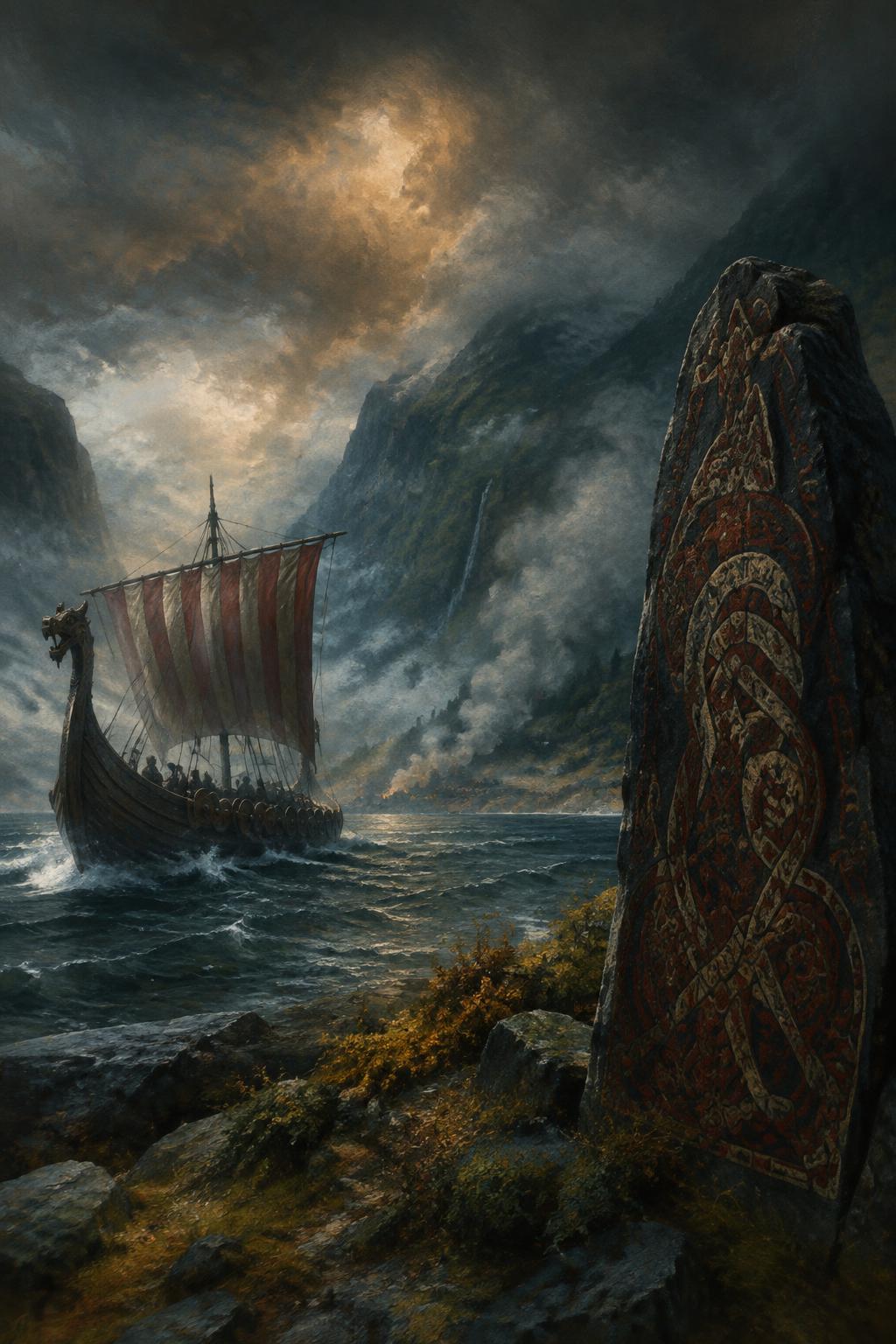
Memorial stones were often painted in bright red, black and white; the carved serpent bands framing the text guided the reading direction.
The Younger Futhark
During the Viking Age the row was reduced to sixteen runes, so each sign carried several sounds. This is the script of the great memorial runestones raised for travellers, traders and warriors.
- The Jelling Stones (Denmark)
- The Rök Runestone (Sweden)
- The Piraeus Lion graffiti (Greece)
Living with Maðr
- Draw ᛘ slowly by hand, stroke by stroke, and notice where your eye rests.
- Speak its sound “M” aloud and link it to the idea of person.
- Hold one keyword — Person, Norse, History — and look for it in your day.
- Return in the evening to its question: What does person bring to mind in your own story?
Divinatory readings are modern interpretations; the historical record tells us about sounds, names and inscriptions.
Across the traditions
What does person bring to mind in your own story?
Question Maðr
Answers are drawn only from this book's explanations of the rune.